Association of Brotherhoods and Confraternities
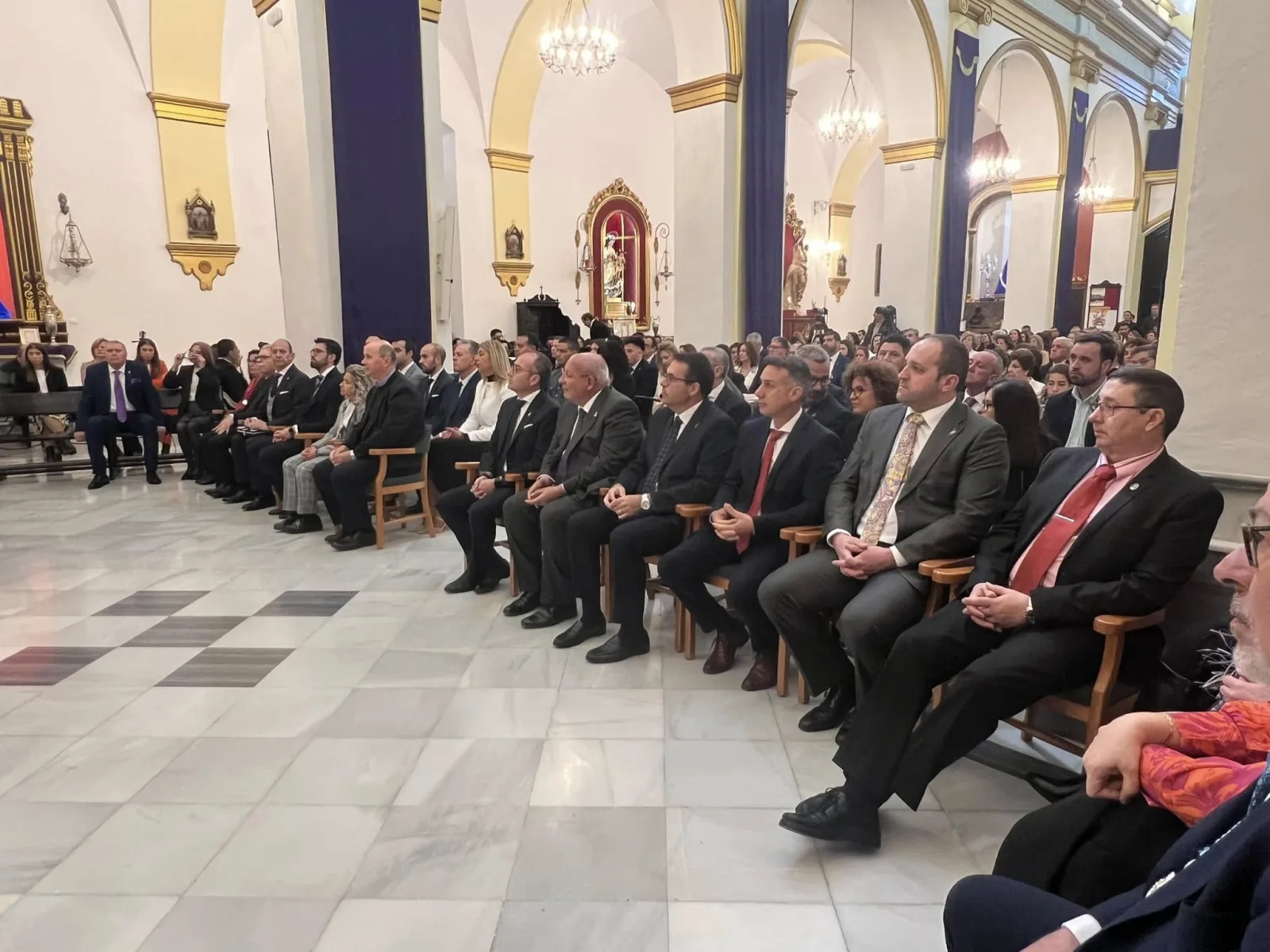
On 20 March 1957 the Association of Brotherhoods and Confraternities of Campillos (Agrupación de Hermandades y Cofradías) was first established, with the aim of joining forces to improve and enhance the town’s Semana Santa.
The Agrupación was reorganised in 1987 with one priority: to acquire an image of the Risen Christ to complete Campillos’s own Way of the Cross and to celebrate joyfully the triumph of life over death. This goal was achieved ten years later, in 1997, when the work of Antonio M. Castillo Jarén was carried through the streets of Campillos for the first time.
Since its reorganisation, the Agrupación has also extended its activity to other cultural and social purposes: it has organised the Pregón (the ceremonial address heralding Semana Santa) every year without interruption since 1988; it gave financial help towards the construction of the high altarpiece of the parish church; it works with social organisations such as the Red Cross and Cáritas; it publishes the magazine “El Consiliario”; it organises the “Tertulias Cofrades” (talks on brotherhood life) and the official Semana Santa poster; it organised and took part in the exhibition “Campillos en su Pasión” (1996) and in the main events of the Great Jubilee of 2000; and it has taken part in the “Expo Arte Cofrade” in Bobadilla Estación since the fair began in 2015.
In the last quarter of the 20th century, the revival of Semana Santa in Campillos made it one of the best known in the province of Málaga, earning it a name of its own every spring.
The Agrupación is made up of the five brotherhoods that take part in Semana Santa processions: “Pollinica”, “Niño Chiquito”, “Vera Cruz”, “Jesús Nazareno” and “Santo Entierro”, together with the brotherhood of Campillos’s patron saint, “San Benito Abad”.
A total of twelve sacred images, carried on eleven tronos and one paso (processional floats), take to the streets on six of the eight days of Semana Santa: Palm Sunday, Holy Tuesday, Holy Wednesday, Maundy Thursday, Good Friday (morning and night) and Easter Sunday. They are accompanied by hundreds of women wearing mantillas (traditional lace veils), some seventeen bands, hundreds of penitents, the corresponding groups of romanos (participants dressed as Roman soldiers) and consiliarios, and several hundred hombres de trono and costaleros (float bearers). In a town of just over 8,800 inhabitants (2026), countless spectators, of all beliefs, join local people to fill the squares and streets each year.