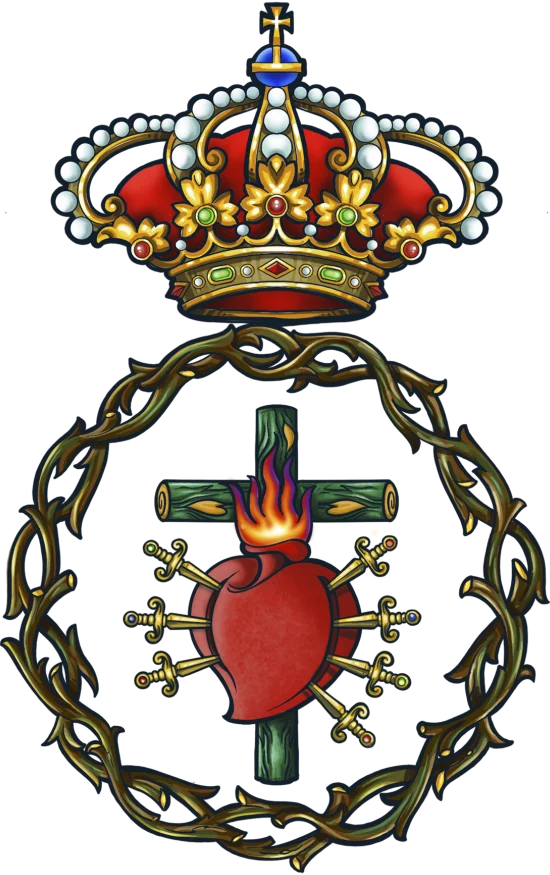
Coat of arms of Vera+Cruz

Santísimo Cristo de la Vera+Cruz and María Santísima de los Dolores

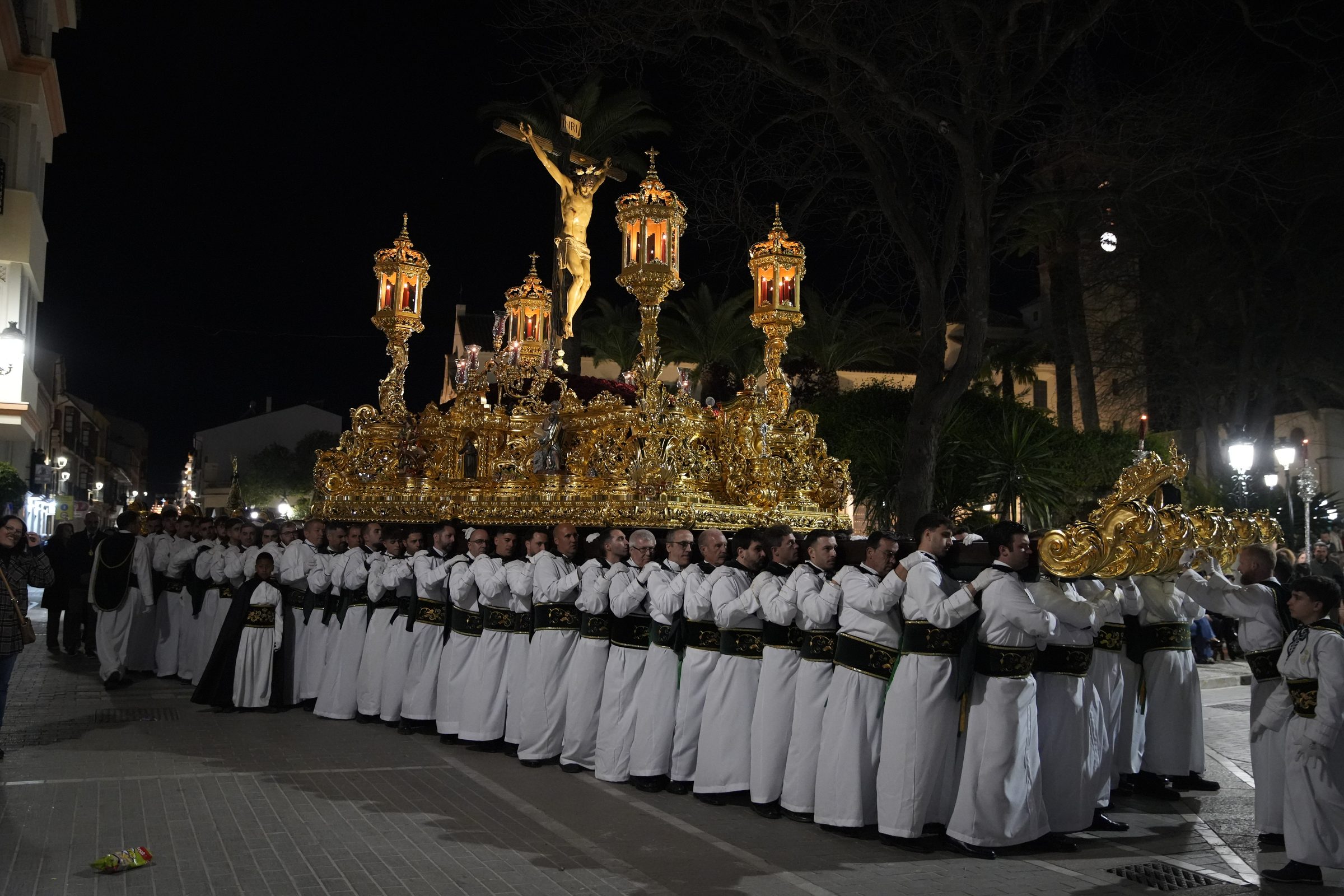
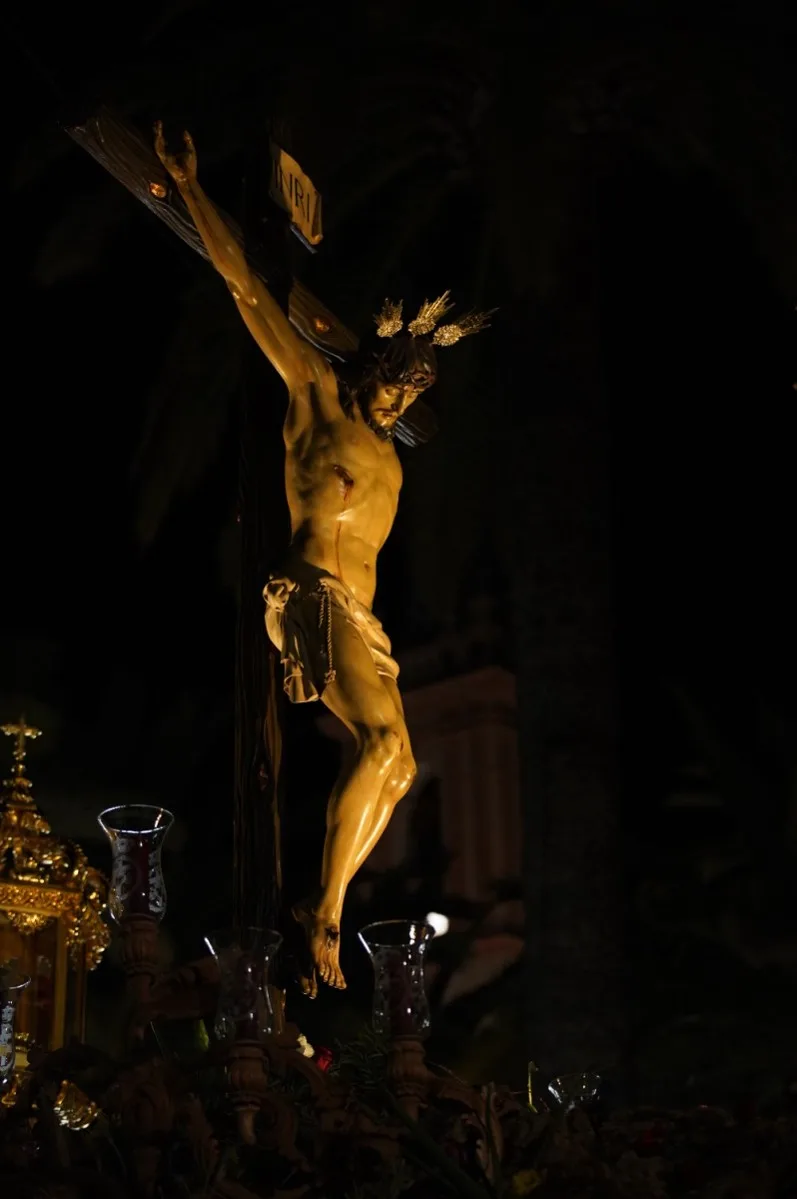
The crucified Cristo de la Vera+Cruz against a dark background

The brotherhood

On the night of Maundy Thursday, the sacred images of the Santísimo Cristo de la Vera+Cruz and María Santísima de los Dolores are carried in procession together with the Santo Lignum Crucis (a relic of the True Cross), after the Sermón de Encuentro (a sermon accompanying the meeting of the two images) given by a member of the brotherhood. It takes place in darkness and silence, as the preacher speaks the liturgical words: “Mother, behold your son! Son, behold your mother!” In this way the two images meet before setting out on their route.

Maundy Thursday

Route

See the streets in the route list.

Departure
21:30
Return
03:00
Procession starting point
Iglesia de la Santa Vera+Cruz
Pre-procession meeting point
Avda. Constitución, 55 · 19:30
Bands
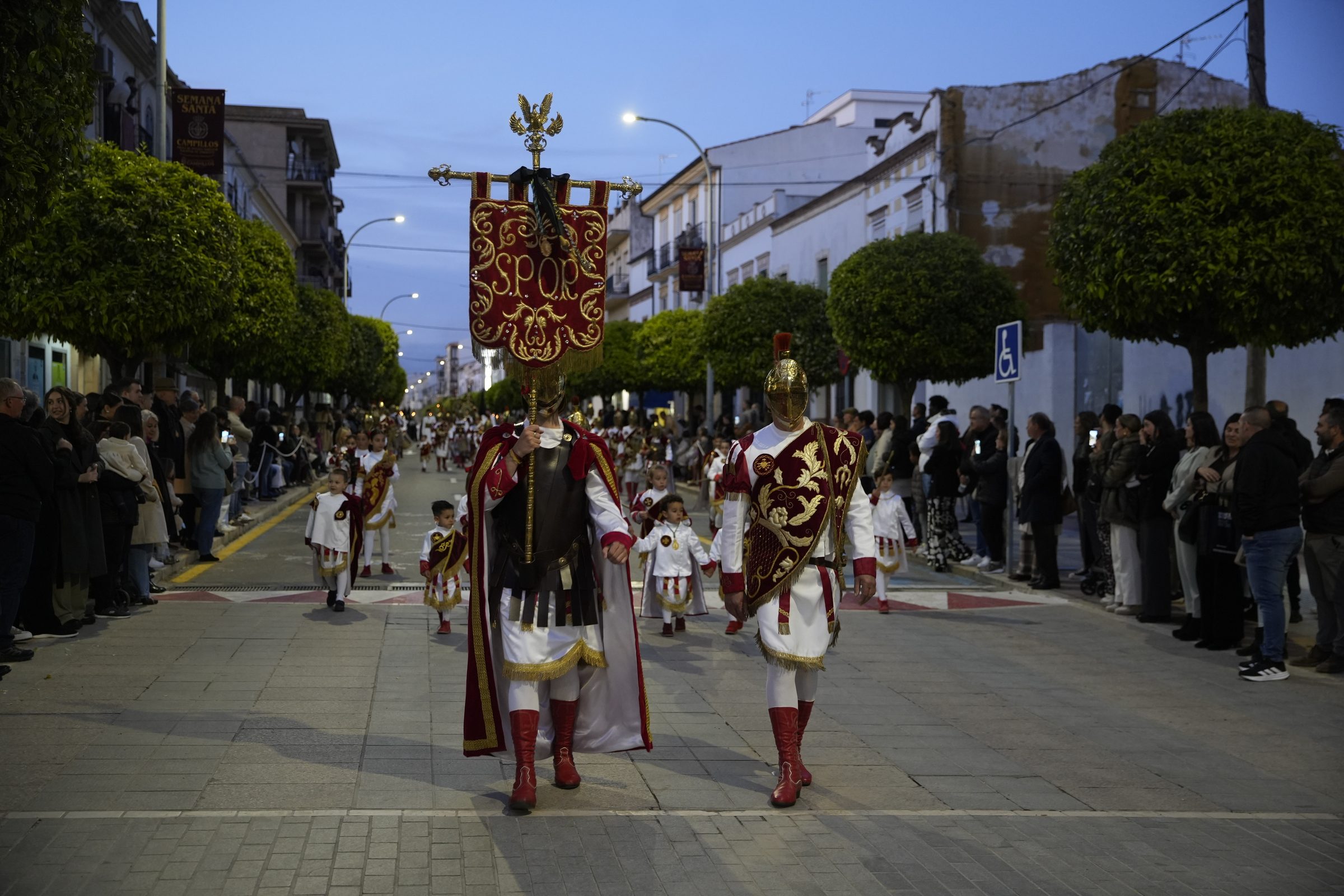
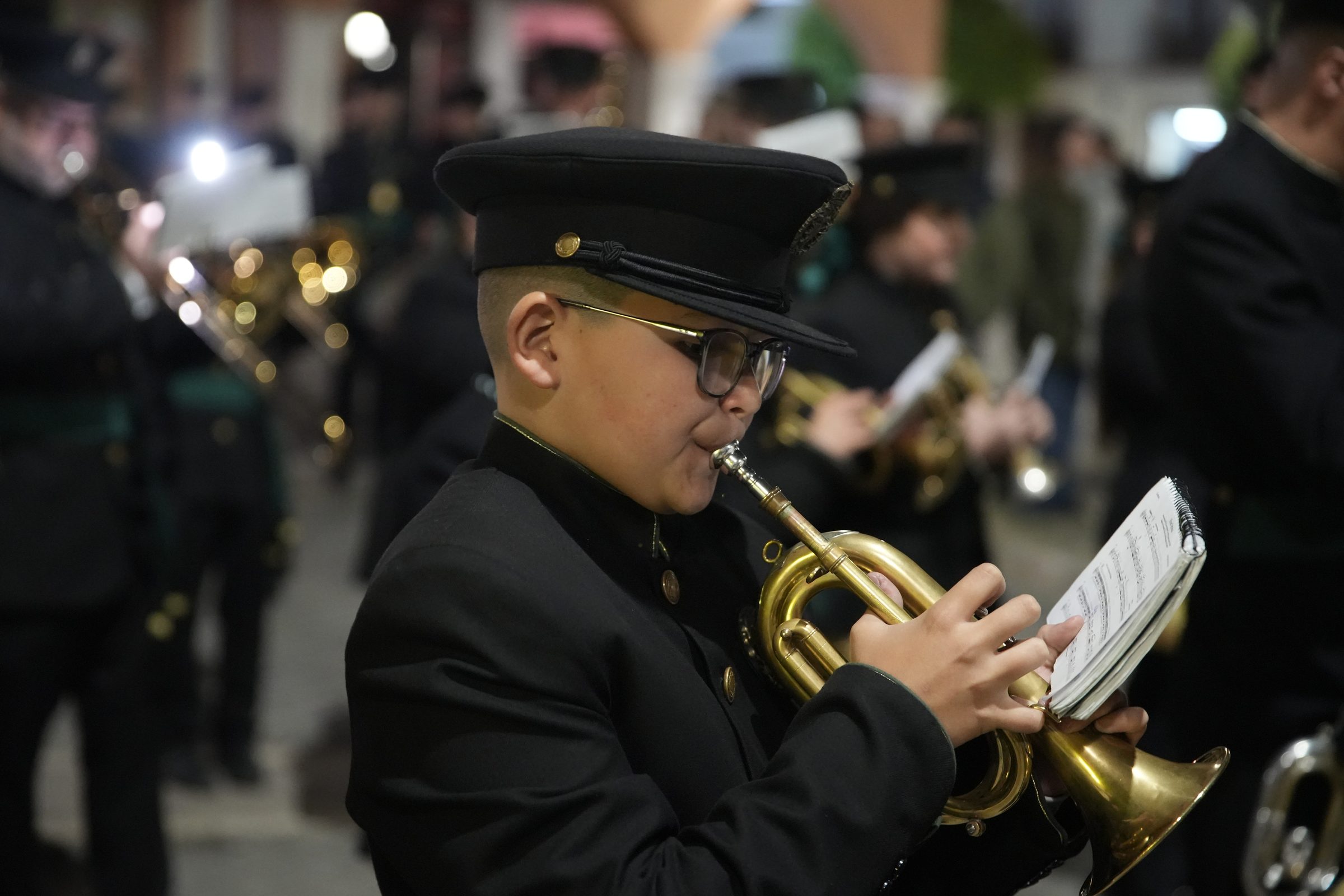
Centuria Romana (Campillos), Agrupación Musical Vera+Cruz (Campillos) and Banda de Música Amantes de la Música (Campillos)

Official route

  1. Iglesia de la Santa Vera+Cruz
  2. Plaza de España
  3. Real
  4. Vallejos
  5. Alta
  6. Plaza Cruz Blanca
  7. Molinos
  8. San Sebastián
  9. Plaza de España
  10. Iglesia de la Santa Vera+Cruz

Sacred images

The crucified Cristo de la Vera+Cruz against a dark background

Santísimo Cristo de la Vera+Cruz

Carved by Antonio Torres Ruda between 1939 and 1942. It depicts the dead Christ, crucified on a tree-trunk cross topped by a scroll bearing the inscription INRI, and fastened with three nails. The head is tilted towards the right shoulder, with the chin resting on the chest. The eyes are half-closed and the mouth half-open, showing the teeth between finely drawn lips. The crown of thorns is braided and carved from the same block as the head, and the image is completed with three potencias (ray-shaped ornaments symbolising Christ’s divinity). Fine trickles of blood flow from the wound in the side towards the loincloth. The loincloth is simple and carved as part of the same figure, following the style of Renaissance Christs: close-fitting at the hips, with a small, barely projecting knot on the right side. There is a fourth fixing at the back of the loincloth.
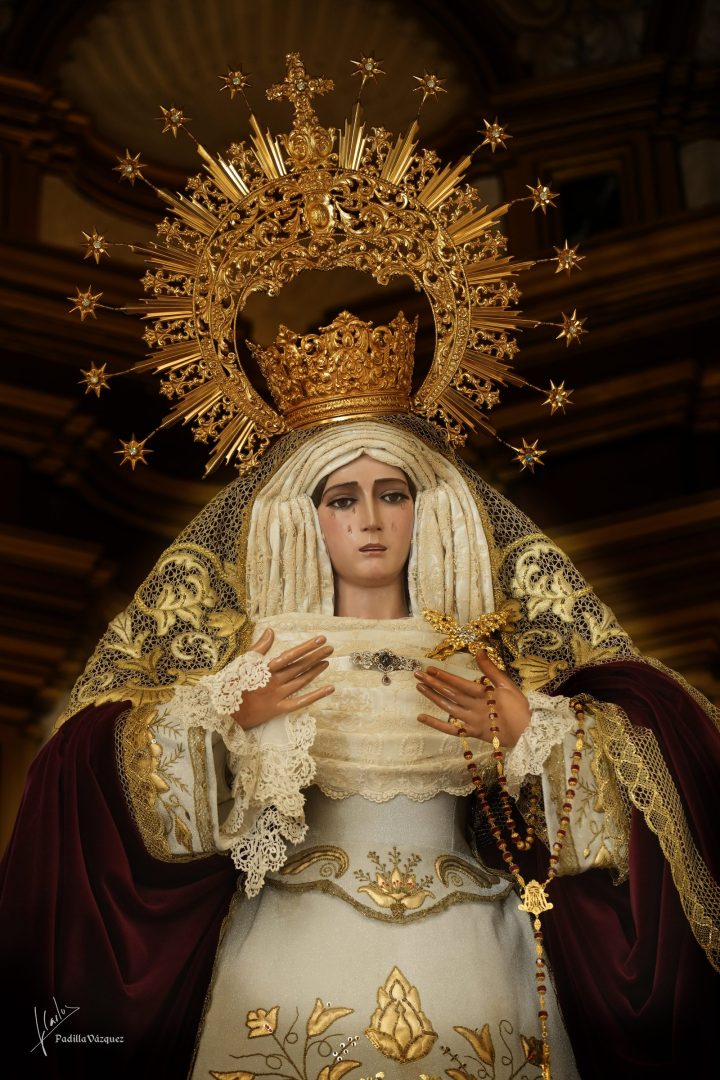
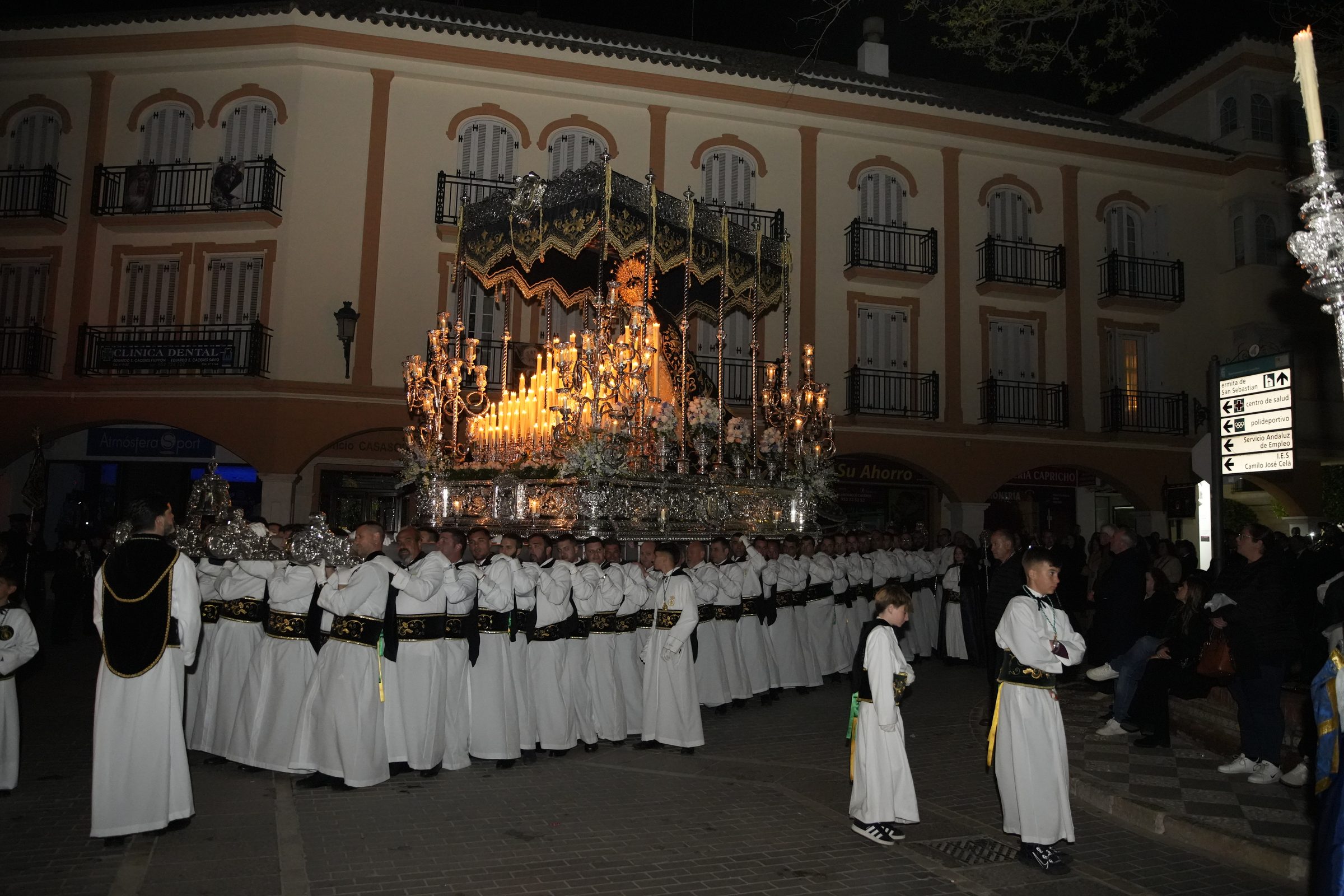
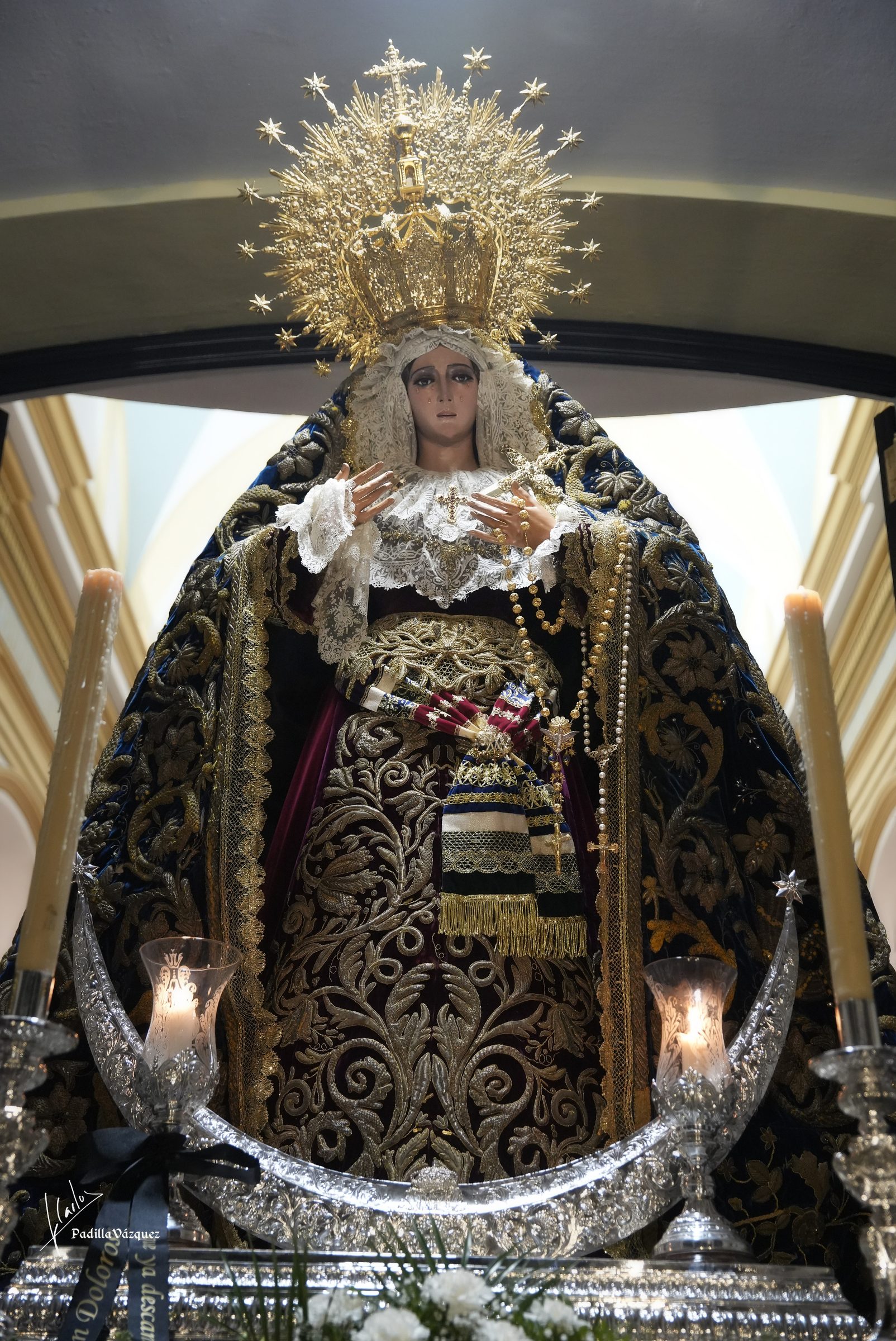
María Santísima de los Dolores, with a crown and starred halo, a maroon mantle and a rosary in her hands

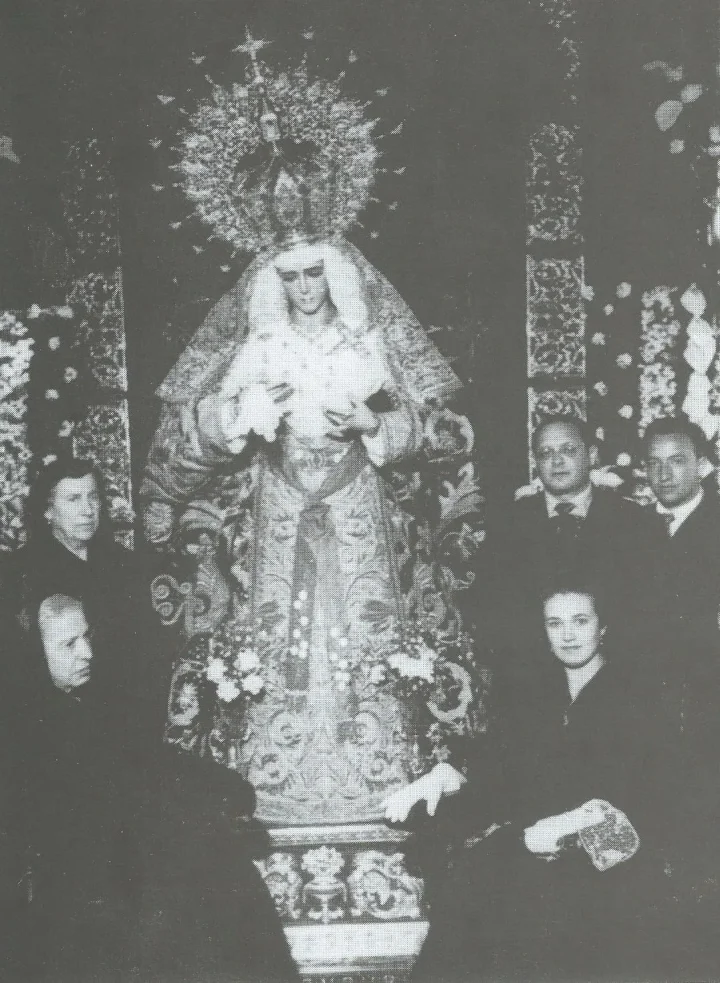
María Santísima de los Dolores

Carved by Antonio Castillo Lastrucci between 1956 and 1957. It portrays the Mother of Jesus as a Dolorosa experiencing the fifth of the Seven Sorrows of Mary. It is an image of quiet sorrow, gentleness and compassion, with large, dark, almond-shaped eyes framed by long eyebrows, hallmarks of Castillo’s Dolorosas. The slight redness of the eyelids and cheeks bears witness to the weeping made visible by the five tears running down the pearly polychromy of her face. This beauty is also found in her straight, finely shaped nose, which leads to her small, half-open mouth, the most expressive feature of her face, with thin lips that reveal part of her white teeth. Her hands stand out for the delicacy with which the slender, elegant fingers are arranged: following Castillo Lastrucci’s model, the middle fingers are grouped together while the thumb and little finger are held further apart, creating a gesture of great elegance.

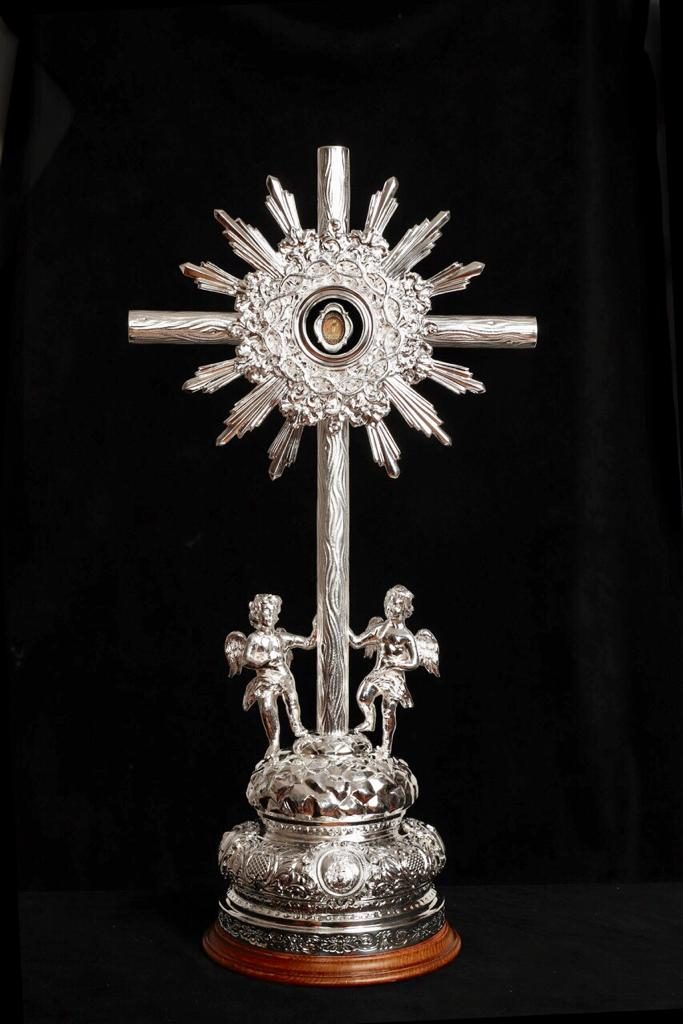
The silver reliquary of the True Cross (Santo Lignum Crucis): a cross framed by rays, held up by two angels

Santo Lignum Crucis

It consists of two small splinters of wood forming a cross, kept inside an oval silver reliquary case, covered at the front by an oval glass and closed at the back, tied with red silk thread and in turn protected by red sealing wax bearing the seal, or coat of arms, from the ring of Cardinal Patricio Naro. The relic is accompanied by a parchment of the period known as the “Carta de Auténtica” (certificate of authenticity).

María Santísima de los Dolores on her trono, in a historic photograph.
María Santísima de los Dolores, in a historic photograph.

History

The oldest surviving document is a book of minutes of the Hermandad del Santo Cristo, dated 1593, which refers to the purchase from the Archdiocese of Seville of a plot of land next to the parish church on which to build its chapel. This suggests that the brotherhood — and, of course, devotion to the image of the Santo Cristo — existed before that date.

Processional dress

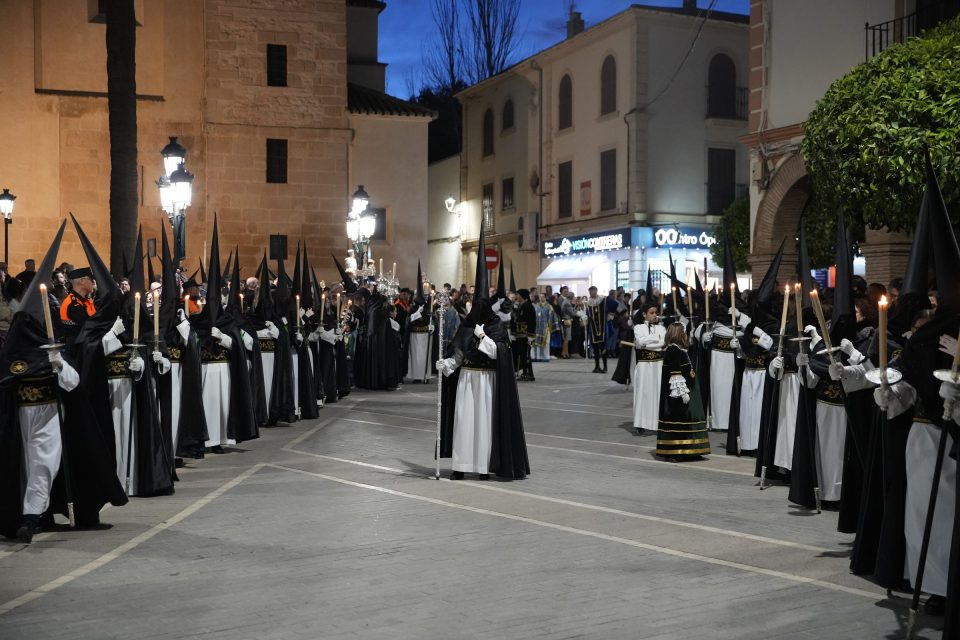
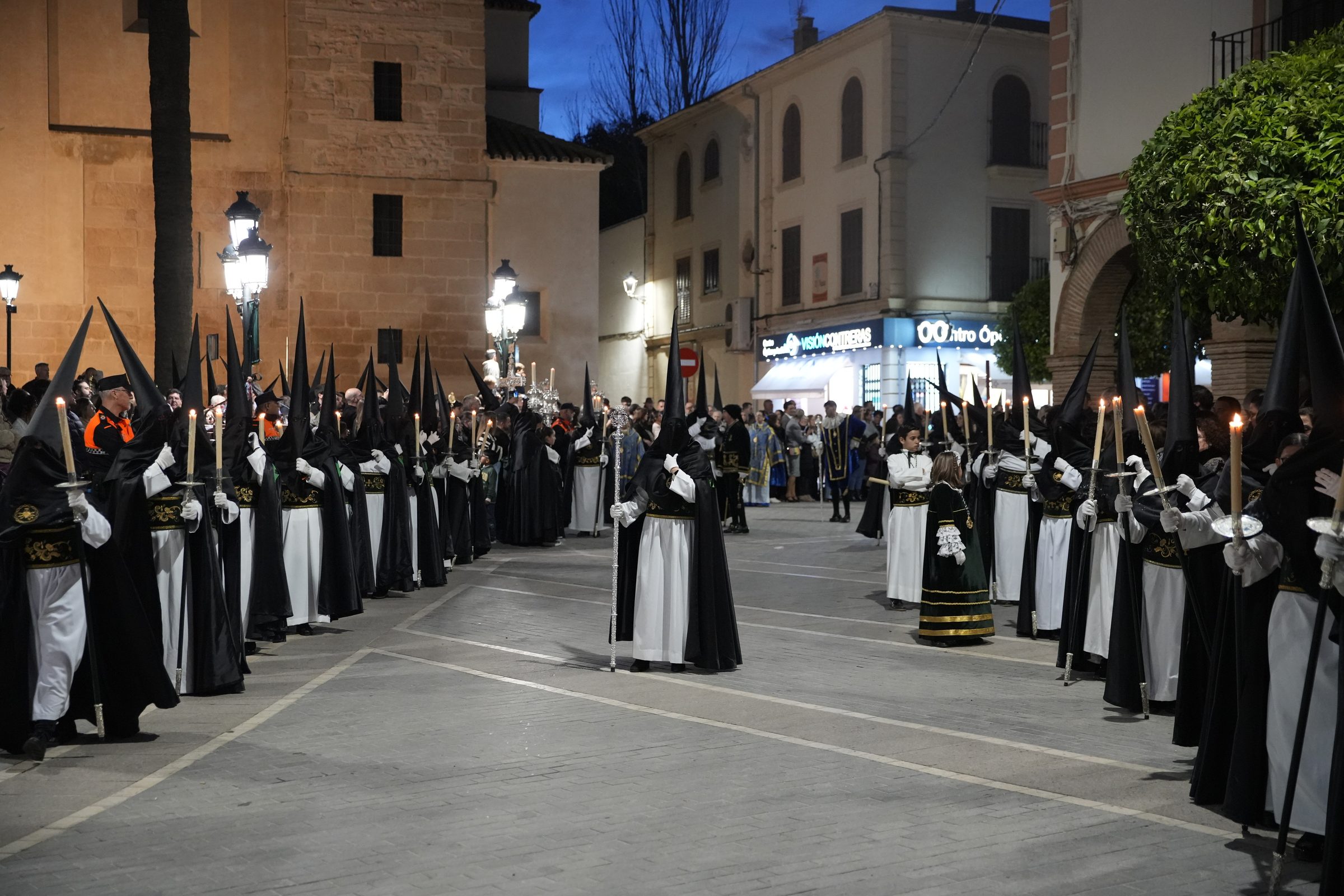
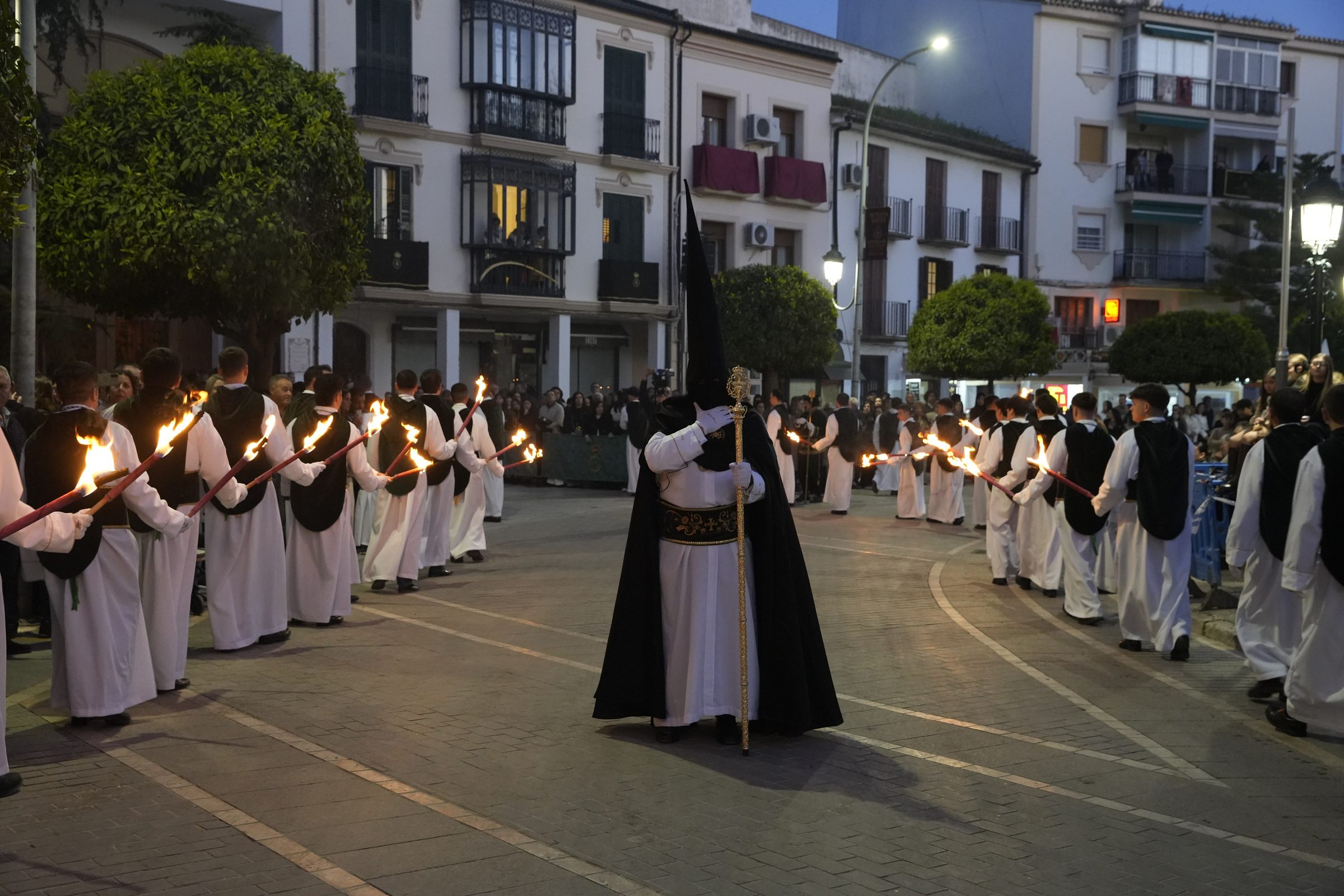
A loose white robe with a black capirote (tall pointed hood) and cape. The robe is fastened at the waist with a green velvet sash embroidered in gold. The capirote is conical, 90 cm high and black, with the brotherhood’s coat of arms embroidered in gold at chest height. Members wear black shoes and socks and white gloves; no insignia other than the brotherhood’s medal may be worn with this attire.

Vera+Cruz nazarenos in white robes with black capes and capirotes, holding lit candles in two rows at nightfall
Nazarenos in white robes with black capes and capirotes.