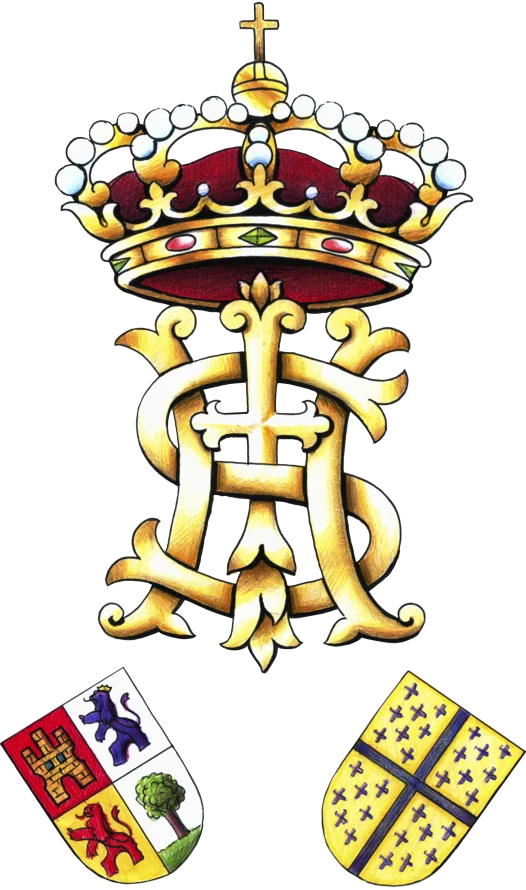
Coat of arms of Jesús Nazareno

Nuestro Padre Jesús Nazareno de la Misericordia and María Santísima de las Lágrimas

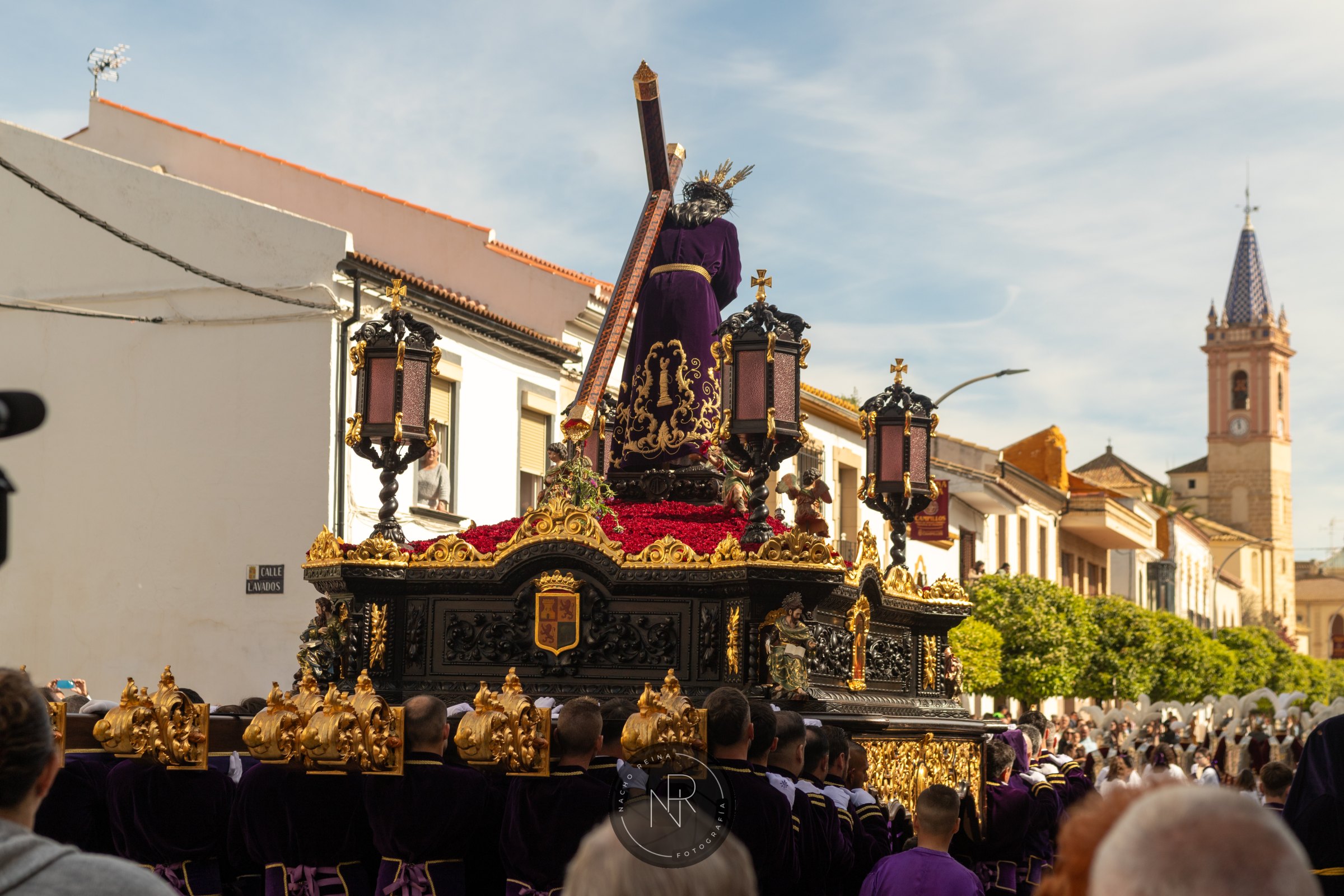
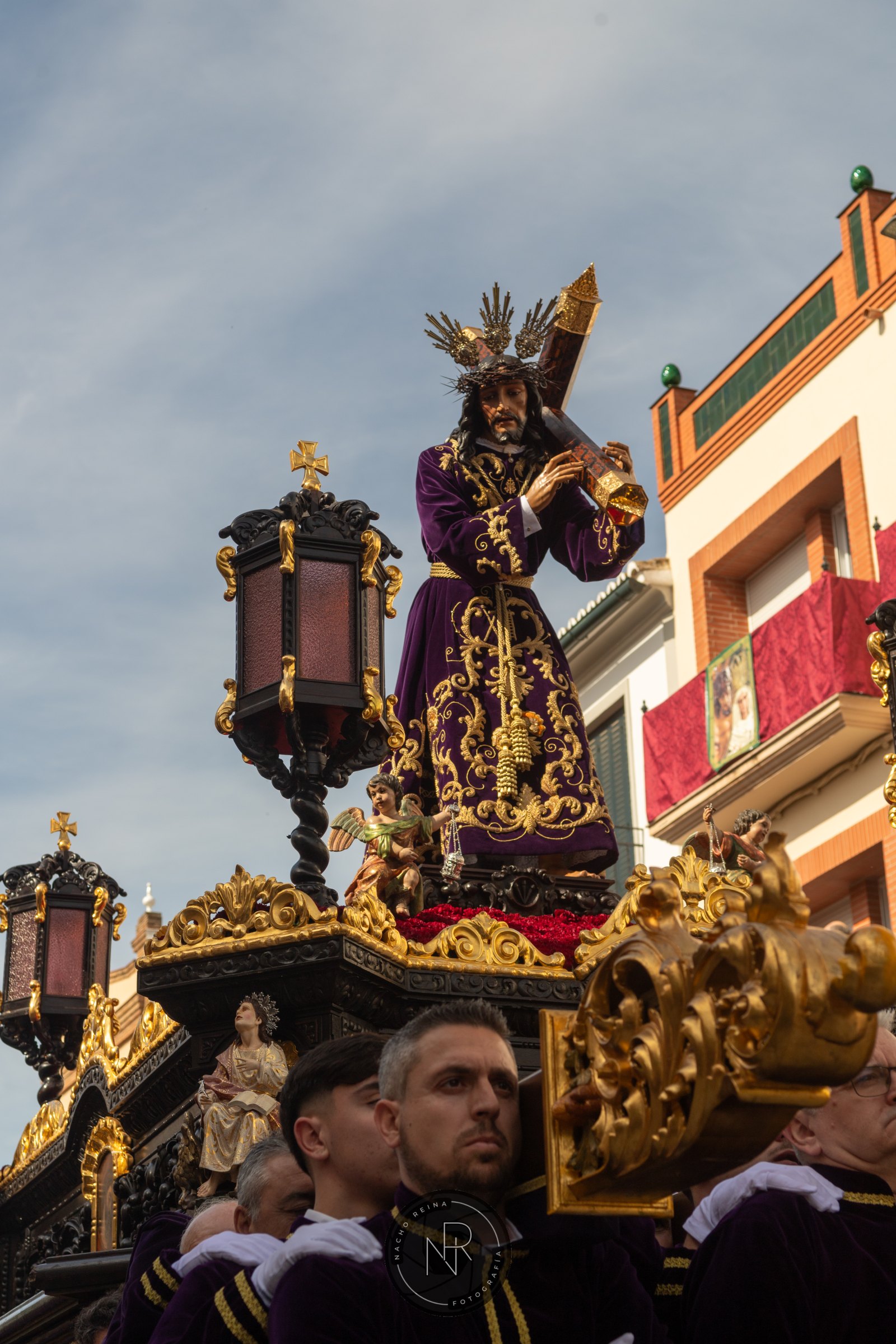
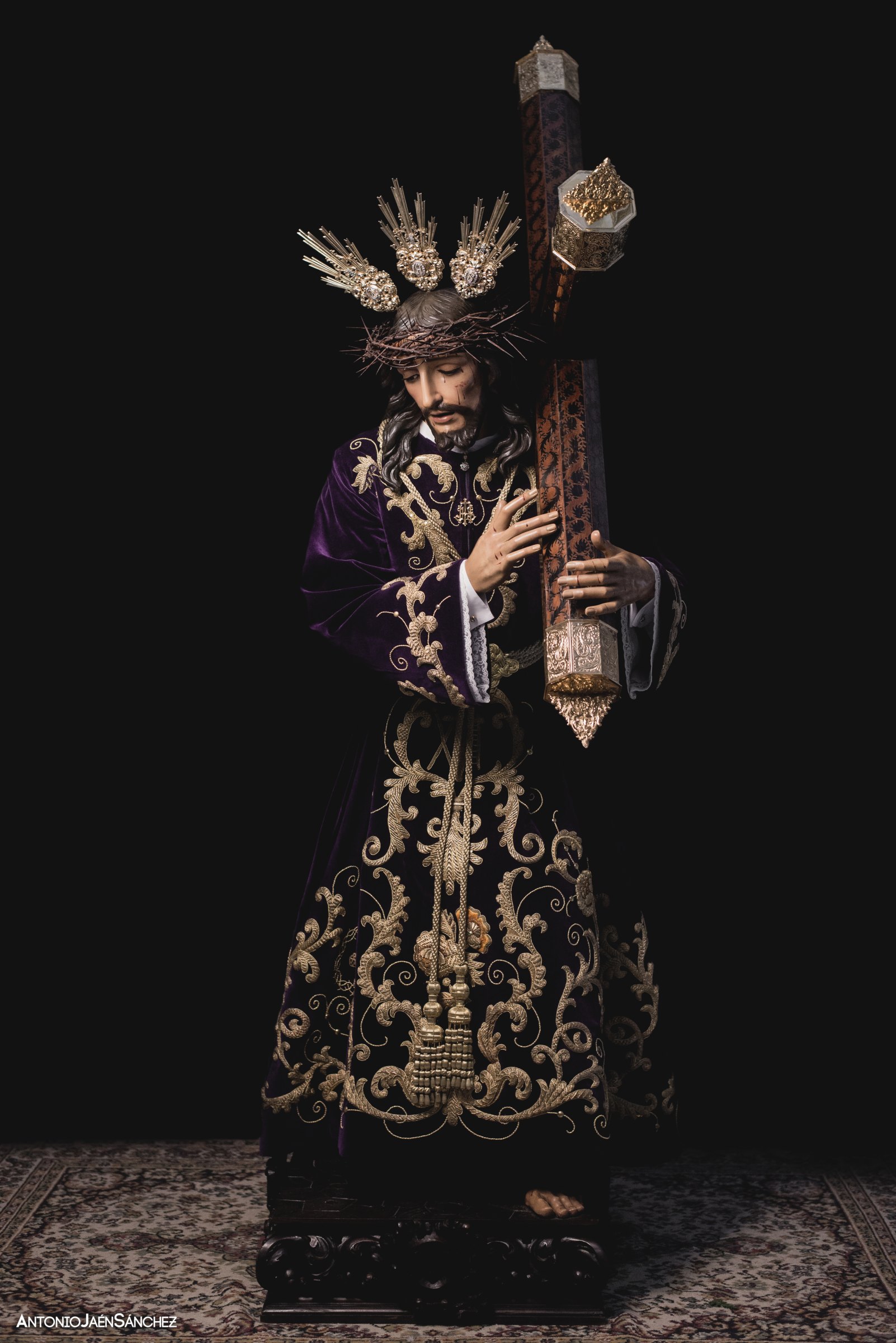
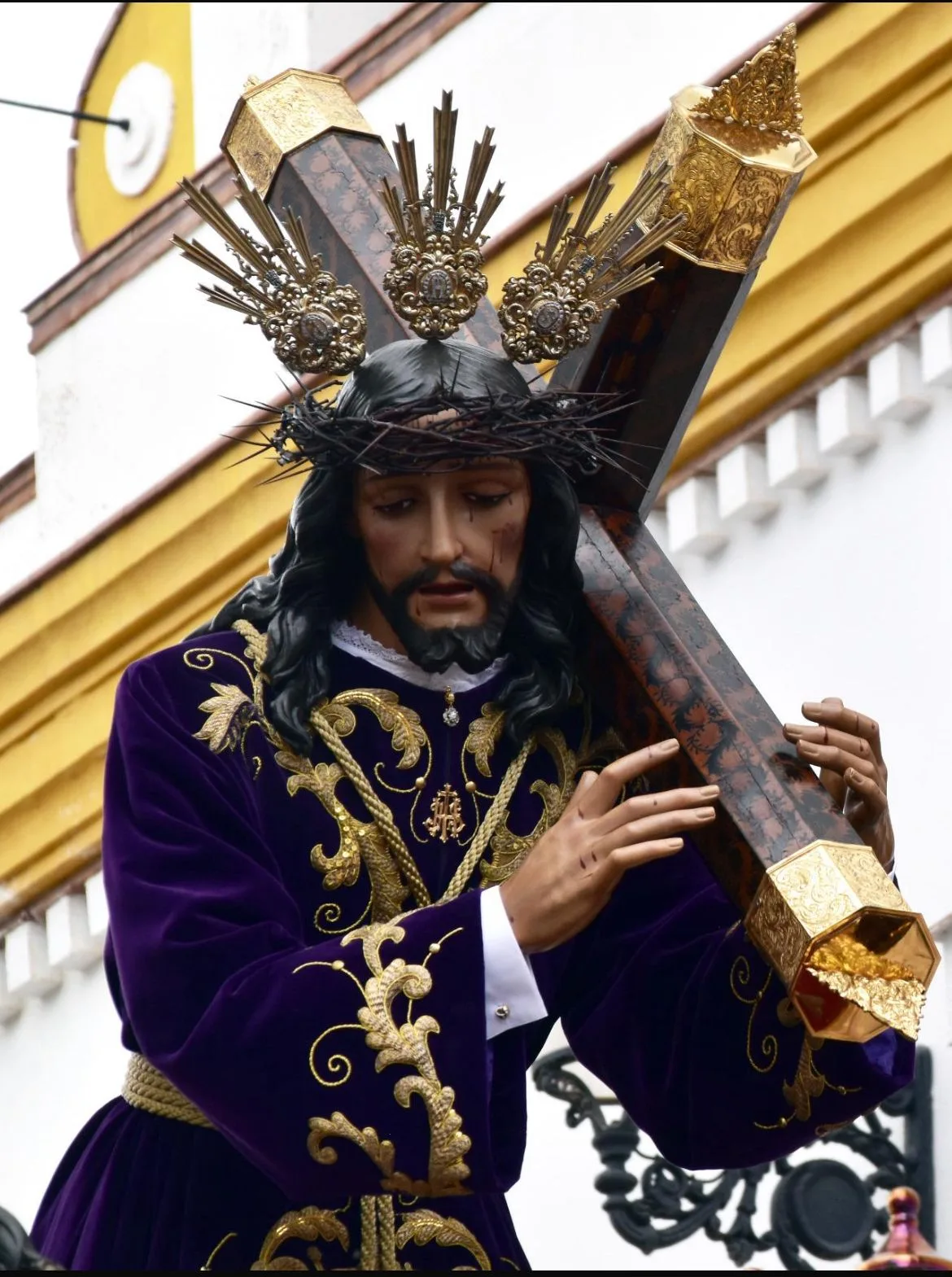
Jesús Nazareno carrying the cross on his shoulder, wearing a purple robe embroidered in gold

The brotherhood

The Romans of Jesús Nazareno open the day by marching through the streets of Campillos at dawn. The departure of this procession is well worth seeing, as the Romans and the trono bearers (the men who carry the processional float) exchange a short dialogue:

Roman: “Does Jesus of Nazareth live here?”
Bearers: “Yes, he lives here!”
Roman: “Open the door, for we have come to arrest him!”

And so Good Friday begins. But that is not all: it is the only brotherhood whose procession passes through the parish church to ask the parish priest’s permission to continue.

Good Friday morning

Route

See the streets in the route list.

Departure
11:00
Return
16:00
Procession starting point
Avda. Puerta de Teba, 29
Pre-procession meeting point
C/ Silla, 21 · 10:00
Bands
Banda de Cornetas y Tambores del Real Cuerpo de Bomberos (Málaga), Banda de Cornetas y Tambores Nuestra Señora de las Lágrimas (Campillos) and Banda de Música Amando Herrero (Algeciras)

Official route

  1. Casa-Hermandad
  2. Avenida Puerta de Teba
  3. Plaza de España
  4. Real
  5. Vallejos
  6. Alta
  7. Plaza Cruz Blanca
  8. San Sebastián
  9. Plaza de España
  10. Avenida Puerta de Teba
  11. Casa-Hermandad

Sacred images

Jesús Nazareno carrying the cross on his shoulder, wearing a purple robe embroidered in gold
Photograph: Ignacio Aguilera

Nuestro Padre Jesús Nazareno de la Misericordia

The sacred image of Nuestro Padre Jesús Nazareno de la Misericordia is the work of the imaginero (religious sculptor) José Navas Parejo (1937). It is a full-length painted wood carving designed to be clothed. It is a Passion image carrying the Cross, depicting Jesus on his way to Calvary. Leaning slightly forward under the weight of the cross, it has a fine, delicate face with marked cheekbones and half-closed eyes, a thin, slender nose, a half-open mouth and a furrowed brow.

It is the image of a sorrowful yet serene Jesus, without any overt expression of pain. On his head rests a crown of thorns, from which trickles of blood run down his face. Other distinctive features include the purple robe with the symbols of the Passion embroidered in gold, the golden cord tied at the waist and the three gold potencias (ray-shaped ornaments symbolising Christ’s divinity) fixed to the head.
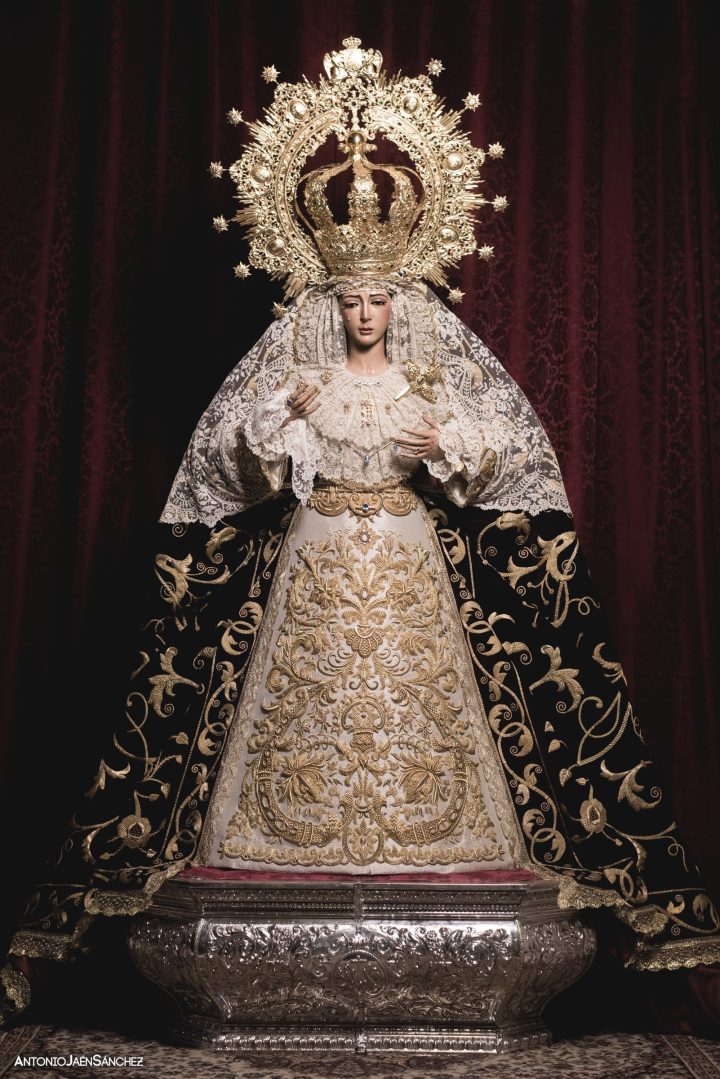
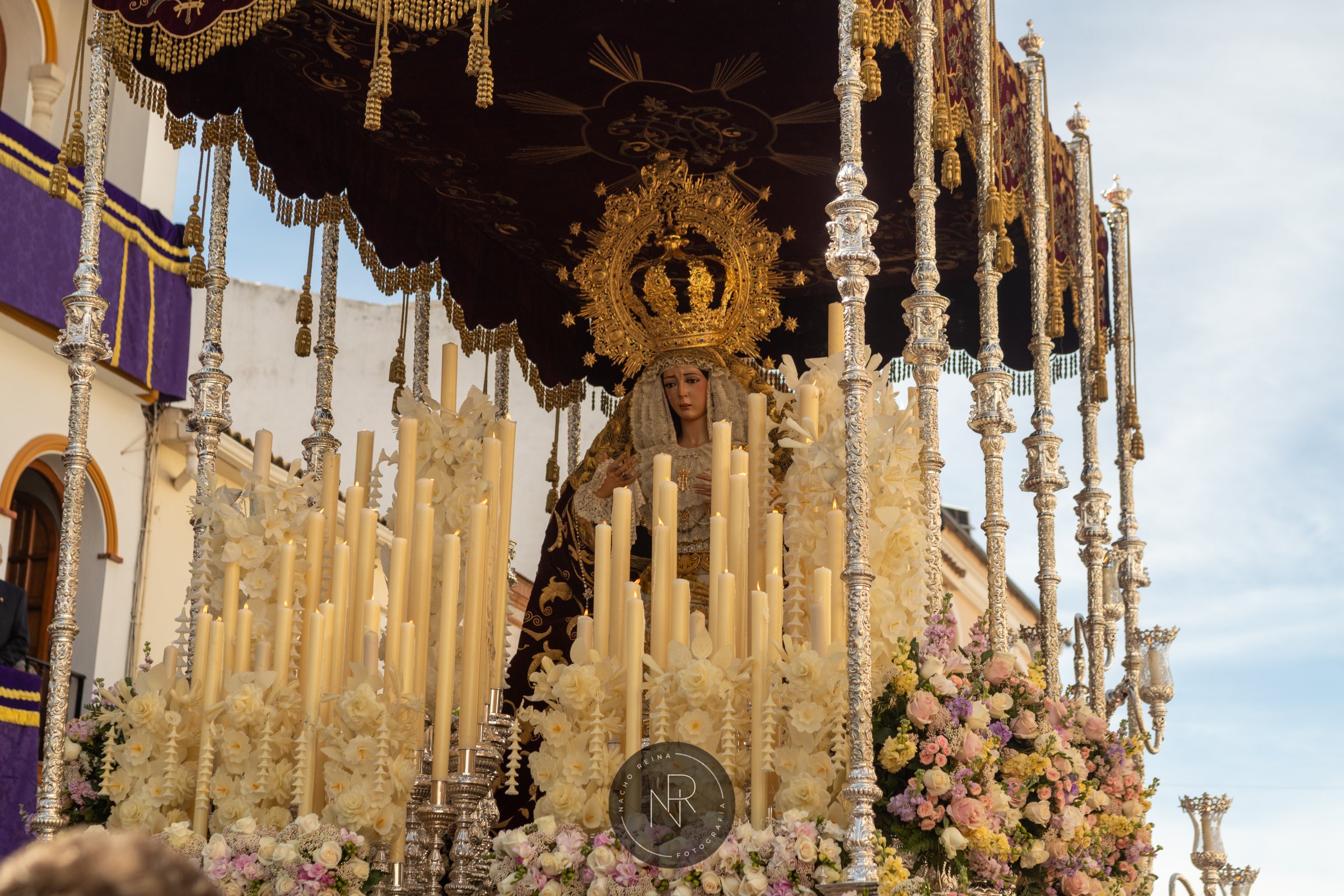
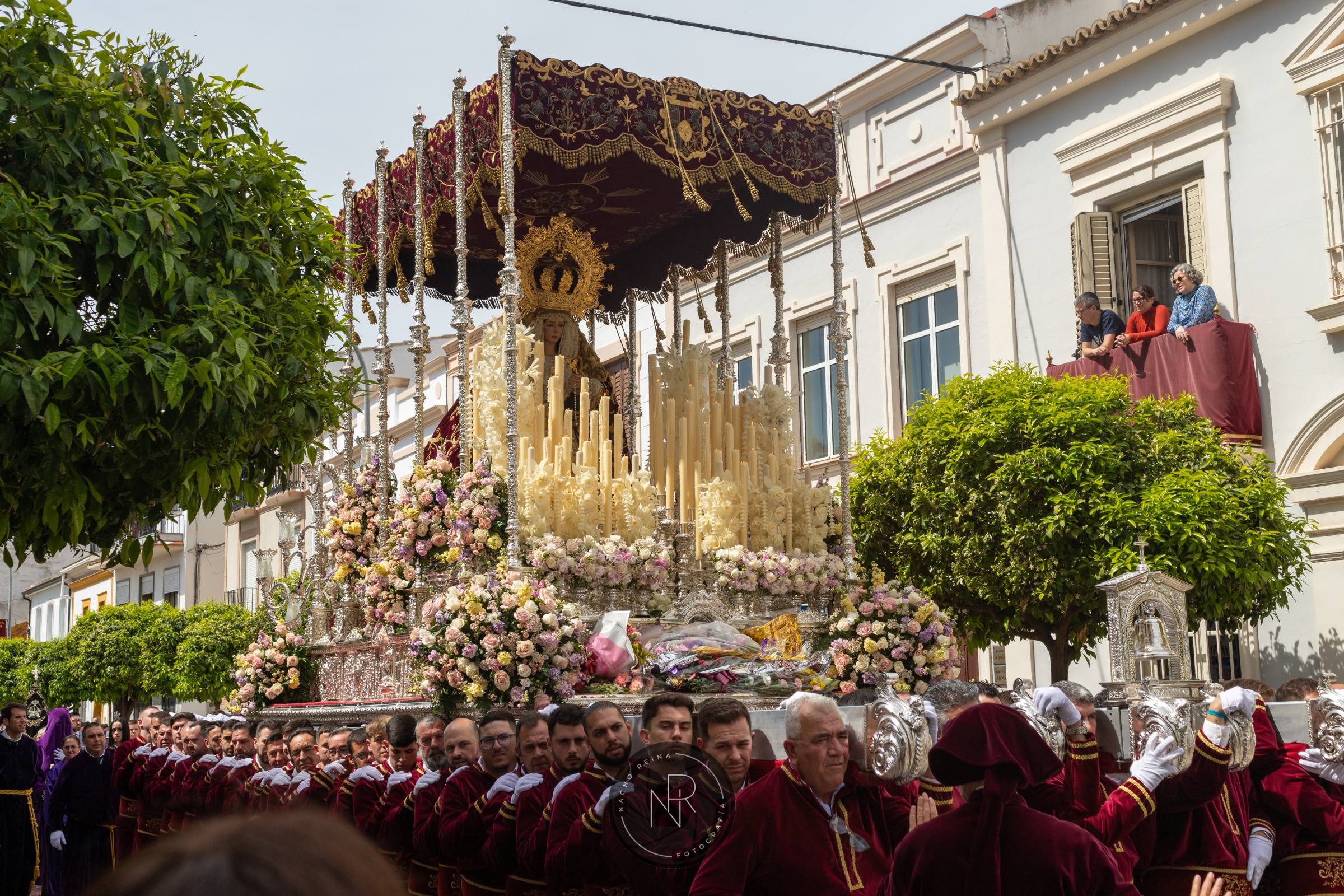
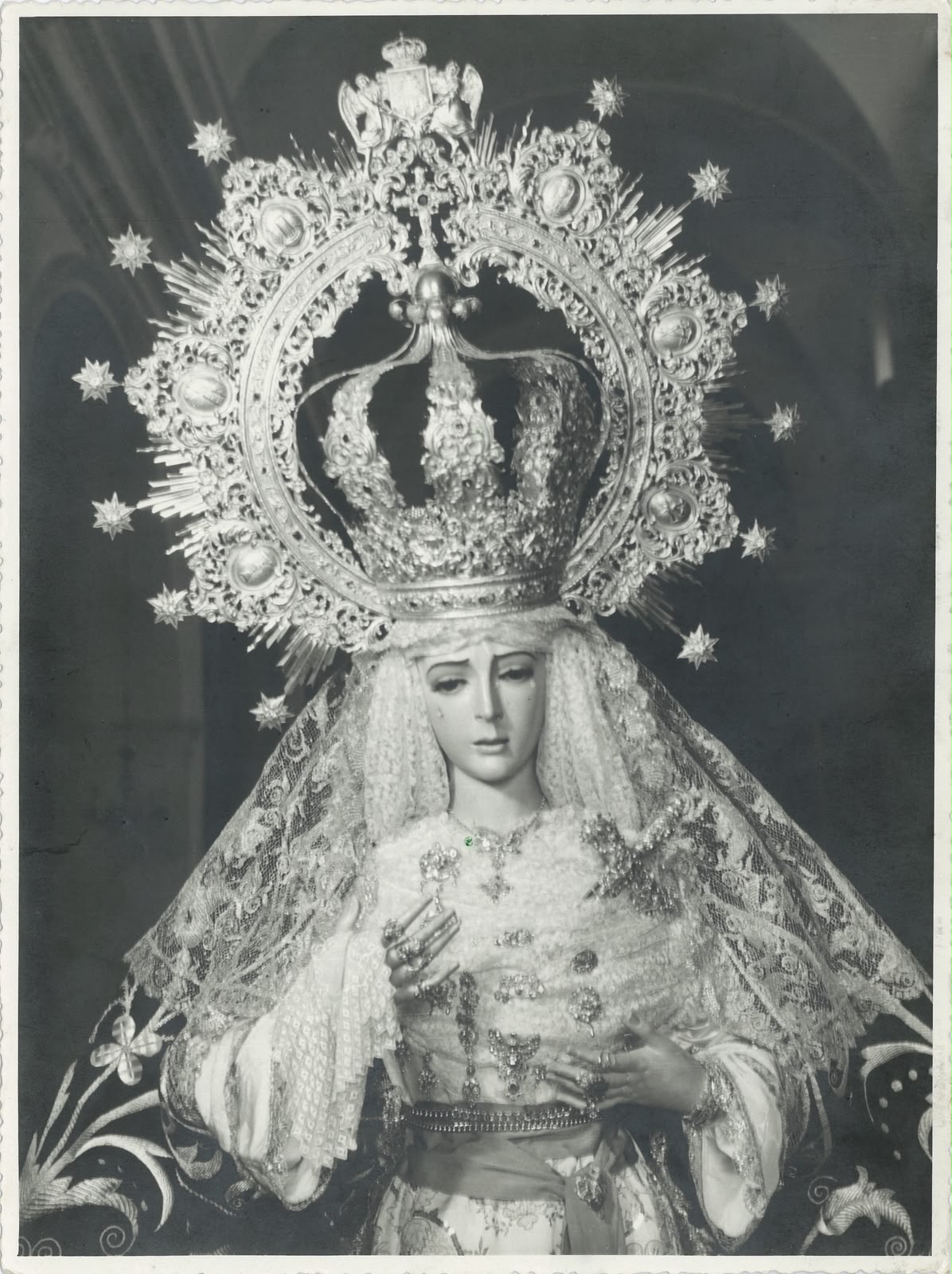
María Santísima de las Lágrimas, with her crown and gold-embroidered mantle
Fotografía: Antonio Jaén Sánchez

María Santísima de las Lágrimas

The sacred image of Nuestra Señora de las Lágrimas is the work of the distinguished Sevillian imaginero (religious sculptor) Antonio Castillo Lastrucci (1941). It is a “candelero” image (a dressed figure on a wooden frame) with great expressiveness in its tense face, which captures the precise moment before she breaks into tears, when emotion catches in her throat. Teardrops run down her face in a restrained gesture of immense sadness, grief and pain. This expression is heightened by her markedly furrowed brow (typical of the “weeping” Virgins of the late 19th century) and the tension in the lower part of the neck. Her large, deep eyes reflect all the pain in her face. The half-open mouth once again underlines this restrained expression. Finally, her head bears a crown framed by rays and stars.

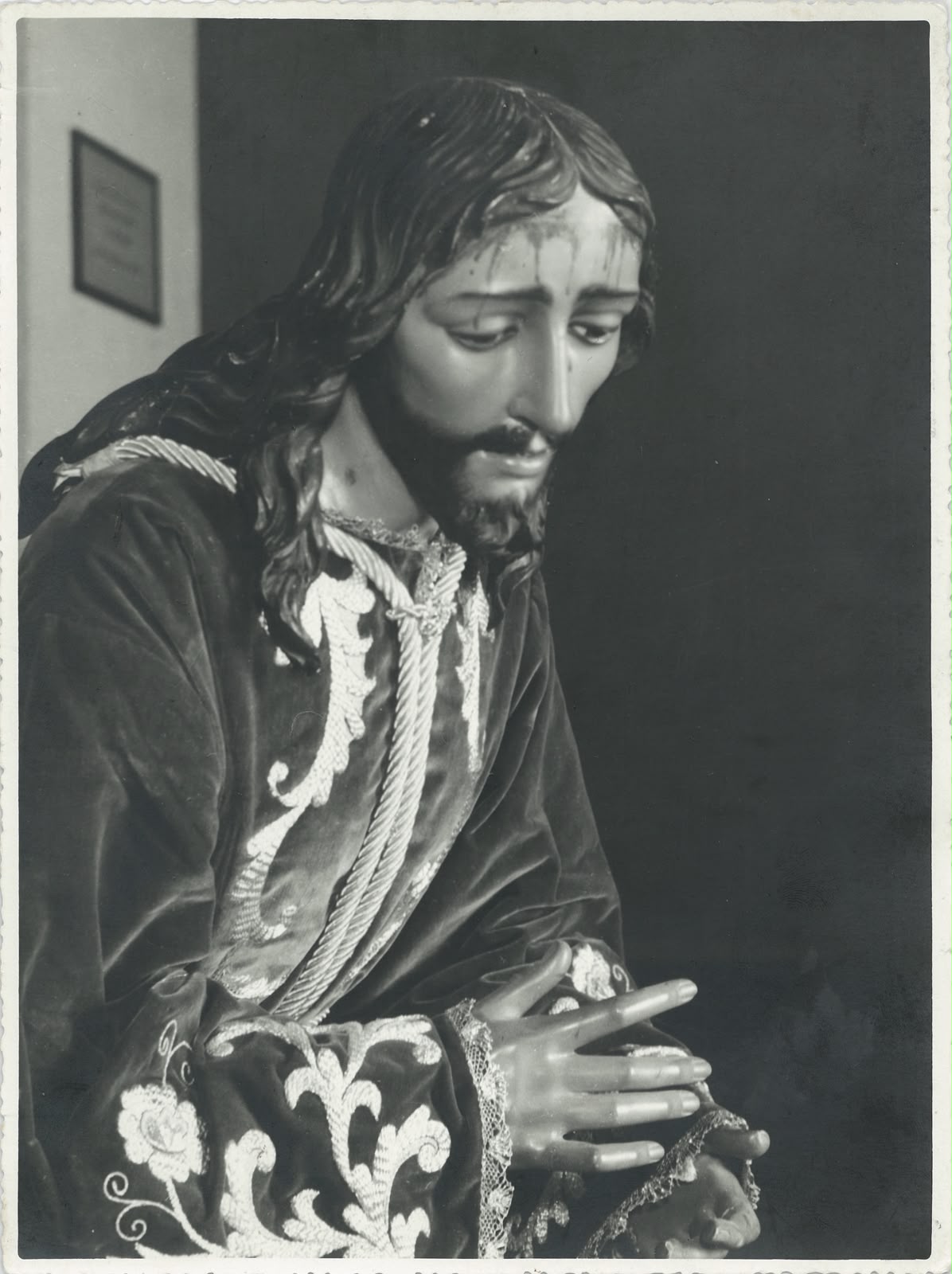
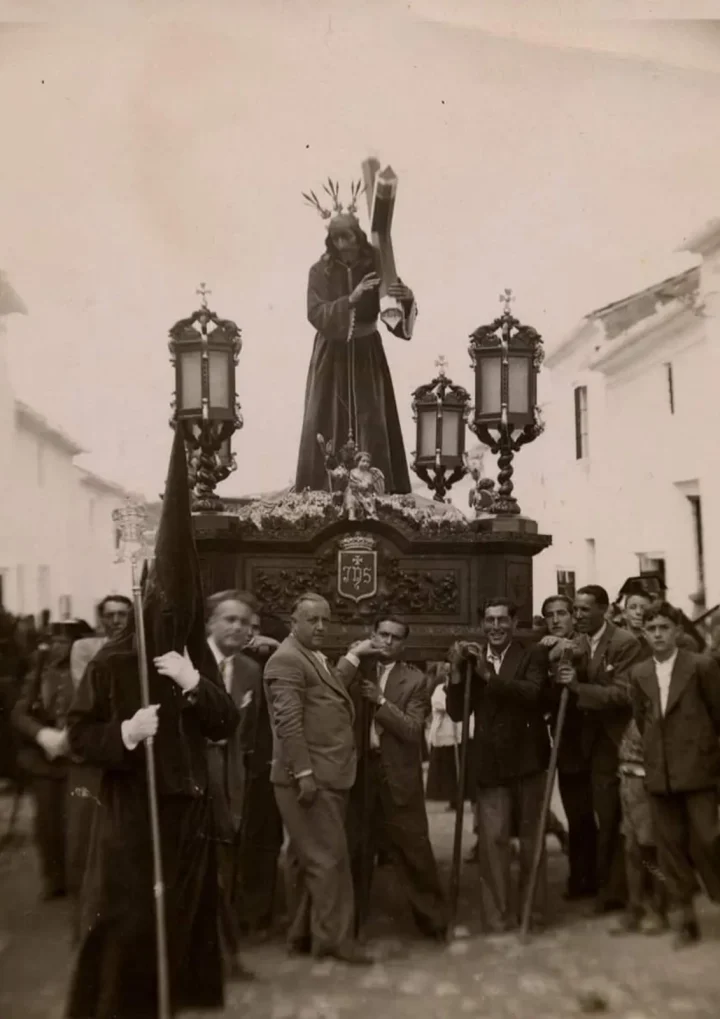
Nuestro Padre Jesús Nazareno on his trono in the streets of Campillos, in a historic photograph.
Nuestro Padre Jesús Nazareno in the streets of Campillos, in a historic photograph.

History

The brotherhood must have been founded in the second half of the 17th century at the latest, after devotion became firmly established among local people to the figure of Jesús Nazareno in the town of Campillos, which seems to have originated with the founding of the chapel by María Gordilla and her descendants. Indeed, the brotherhood must have quickly taken root, as several documentary references have been found showing that in the following century it was firmly established and held a prominent role in Semana Santa, in religious worship and in the religious life of Campillos.

Processional dress

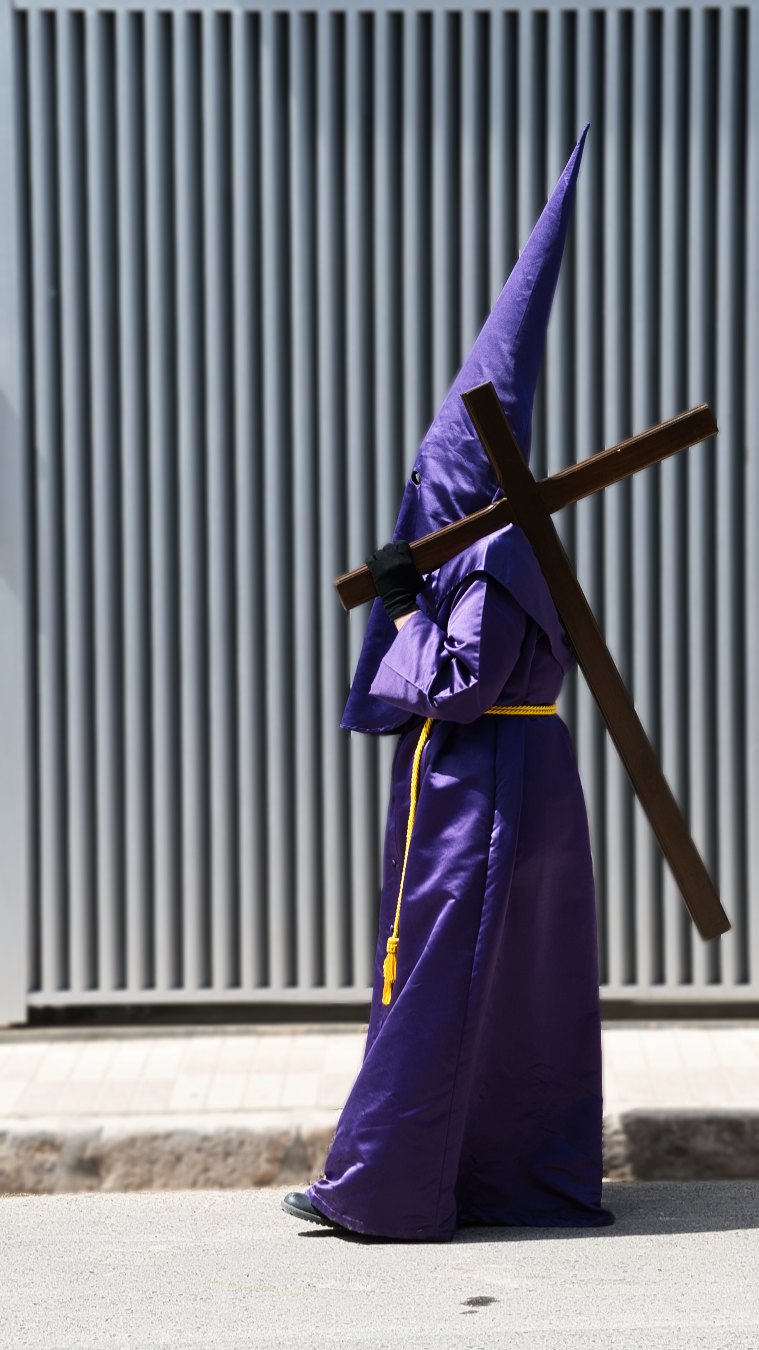
Section of Nuestro Padre Jesús Nazareno de la Misericordia

The penitents who make up the brotherhood’s procession are divided into brothers of light and brothers of penance.

The nazarenos (robed penitents) who make the station of penance in the section of Nuestro Padre Jesús Nazareno de la Misericordia wear a robe and antifaz (face hood) of purple satin. The robe is buttoned all the way down the front and tied at the waist with a yellow cord. Their only accessory is a pair of black gloves. These brothers carry a wooden cross on one shoulder, in the image and likeness of Our Lord.

Section of María Santísima de las Lágrimas

The nazarenos who make the station of penance in the section of María Santísima de las Lágrimas wear a robe and antifaz of purple velvet, the richest fabric of all the nazareno habits seen in the streets of Campillos. The antifaz bears a sun embroidered at chest height, enclosing the initials of Jesus, Man and Saviour (JHS). The robe is buttoned all the way down the front and tied at the waist with a yellow cord. Their only accessory is a pair of white gloves. These brothers carry a candle holder, offering their wax along the whole route.

Children

Most younger members may wear a robe of purple velvet, buttoned all the way down the front and tied at the waist with a yellow cord. They also wear a white rochet or alb and white gloves.

The Holy Woman Veronica

A distinctive feature of the brotherhood is the biblical figure it includes in its procession: the Holy Woman Veronica. She is played by a teenage girl, who wears a robe with a train, a cape and a veil over her head, in the manner of Hebrew women of the time. In her hands she carries a linen cloth bearing the Holy Face of Christ. The cloth belongs to the brotherhood and is the work of the local painter Andrés Carrasco.